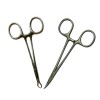

Why Choose LiBrand™ - The Original No-Scalpel Vasectomy Instruments?
Proven in over 20 million procedures worldwide, LiBrand instruments are the only ones used in every major clinical study on No-Scalpel Vasectomy (NSV). Their unique design and precision set the standard for safe, effective vasectomy.
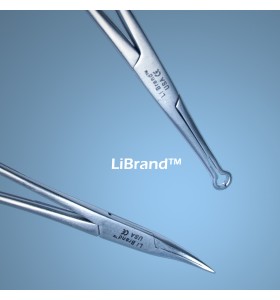
According to Dr. Li Shunqiang, the inventor of the No-Scalpel Vasectomy technique, the key to NSV's revolutionary 10-fold reduction in complications — especially bleeding — lies in the cantilever design of the ring clamp. LiBrand instruments utilize this distinctive cantilever mechanism. This innovation consistently reduces tissue trauma around the vas deferens, significantly lowering the risk of hematoma and enhancing patient recovery.

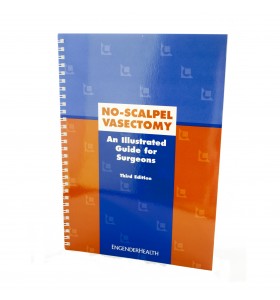
Read a Chapter From: No-Scalpel Vasectomy - Illustrated Guide for Surgeons
No-scalpel vasectomy is a refined surgical approach for isolating and delivering the vas deferens that minimizes trauma and complications. It requires two specially designed instruments developed by Dr. Li Shunqiang, the originator of this technique. In this chapter, you will learn about these instruments and the critical supplies needed for NSV, helping reduce complication risks. This content is provided by Engender Health.
Why Should You Learn the No-Scalpel Vasectomy?
Many leading teaching organizations have adopted the No-Scalpel technique as the standard method for training physicians and residents in vasectomy. If you are not currently performing NSV, consider how it can benefit both your patients and your practice.
- Less patient discomfort and faster recovery times compared to conventional vasectomy.
- Lower rates of bleeding, infection, and hematoma.
- Minimized scarring and improved cosmetic results.
- Widely endorsed by professional associations such as the American Urological Association.
Frequently Asked Questions about Vasectomy Instruments & NSV Techniques
Why does VasectomyStore offer different types of ringed forceps, and what does "cantilever" mean?
VasectomyStore provides several types of ringed forceps—cantilevered, non-cantilevered small, and non-cantilevered teardrop—because different practitioners favor different surgical techniques. Each instrument offers unique advantages depending on the approach used.
The term “cantilever” describes a special mechanical design in the ringed forceps that controls how pressure is applied at the instrument’s tips. Unlike conventional clamps where pressure increases linearly as handles close, cantilevered ringed forceps increase pressure up to the locking point; beyond that, squeezing the handles gently separates the tips slightly to reduce pressure on delicate tissue, minimizing trauma during vas isolation.
What are the benefits of the Standard Cantilevered Ringed Forceps?
The standard cantilevered ringed forceps is our most popular instrument and the gold standard for No-Scalpel Vasectomy (NSV). Invented by Dr. Li Shunqiang, this design dramatically reduces complications, particularly bleeding, by minimizing tissue trauma around the vas deferens.
This forceps firmly yet gently holds the vas without crushing surrounding delicate structures like the vas artery, ensuring precise handling. The ring clamp's correct tension keeps the scrotal skin taut over the vas, preventing “swimming” — unwanted vas movement during surgery that can cause inaccurate punctures.
For most patients, the 3.5mm ring size (VE-1 model) offers an optimal fit. A 4.0mm clamp can be employed for larger or more challenging cases, but sizes above 4.0mm risk allowing the vas to shift inside the ring, affecting surgical accuracy.
What is the Non-Cantilevered Small Ringed Forceps, and when is it used?
The non-cantilevered small ringed forceps, roughly 3.0mm in diameter, is preferred by some practitioners using a hybrid approach. These users create a small incision with a scalpel or hemostat, then insert the forceps into the scrotum to grasp and deliver the vas deferens.
While this allows easier delivery in certain cases, it carries a higher bleeding risk relative to the standard cantilevered forceps. The smaller ring facilitates entry through smaller or tighter openings, making it suitable for more delicate anatomical situations.
What are the characteristics of the Non-Cantilevered “Teardrop” Ringed Forceps?
The teardrop-shaped, non-cantilevered forceps is a newer instrument used predominantly in the United States. Created by a family physician who lacked access to original NSV instruments, this forceps features a larger ring.
The larger size makes it easier for novices to grasp the vas during training, but it does not stretch the scrotal skin tightly, allowing the vas to shift laterally. This instability can lead to less precise entry punctures and an increased risk of bleeding compared to standard NSV clamp designs. It is mainly recommended as a training tool or for specific non-standard methods.
What is the No-Scalpel Vasectomy (NSV) technique?
NSV is a refined outpatient vasectomy technique that involves accessing the vas deferens through a small puncture instead of a scalpel incision. Using specialized instruments such as the LiBrand ringed forceps and dissecting forceps, NSV minimizes bleeding, tissue trauma, and infection risk while promoting faster recovery and less post-op discomfort.
This technique has rapidly become the global standard for vasectomy due to its safety profile, efficiency, and high patient satisfaction. NSV reduces the need for sutures and allows men to return to normal activities sooner than with traditional vasectomy.
How do LiBrand™ instruments improve NSV outcomes?
LiBrand™ instruments incorporate ergonomic designs, including the patented cantilever mechanism in ring clamps, to decrease tissue pressure and trauma. Over 20 million NSV procedures worldwide have been performed using these instruments, establishing their reliability and efficacy.
They have repeatedly been cited in major clinical studies confirming substantial reductions in complications such as hematoma and infection, and improvements in patient comfort and procedural consistency.
Where can I find training resources and procedural guides?
VasectomyStore offers a comprehensive range of educational materials for practitioners, including illustrated training manuals, detailed printed brochures, and high-quality instructional videos featuring best practices in NSV techniques.
These resources are designed to help physicians, residents, and providers of all experience levels achieve proficiency and confidence in NSV. Browse our Illustrated Guide for Surgeons and visit our Video Library to view procedure demonstrations.
What aftercare materials does VasectomyStore provide?
We carry a full selection of patient-centered postoperative care products to support recovery and comfort after vasectomy. This includes scrotal supporters designed to reduce swelling, sperm testing kits for confirmation of success, pain management solutions, and sterile dressings for wound care.
Explore our Patient Store for these supplies, all chosen and stocked to enhance outcomes and patient satisfaction post-vasectomy.
No-Scalpel Vasectomy Instruments & Equipment Overview
This concise video showcases the primary specialized instruments used in the No-Scalpel Vasectomy technique, including the cantilever ring clamp designed to reduce scrotal skin injury, the sharp curved hemostat used for puncture and dissection, and thermal cautery for precise vas lumen sealing.
No-Scalpel Vasectomy Procedure Demonstration
A step-by-step demonstration of the No-Scalpel Vasectomy procedure highlighting the technique’s safety, efficiency, and minimal invasiveness. Learn how expert surgeons perform the procedure with precision instruments to ensure patient comfort and excellent clinical outcomes.